

Strength Training for Beginners Over 40 — How to Start Safely in the Hills District
If you’re over 40, living in Norwest, Bella Vista, Castle Hill or the wider Hills District, and you’ve been told…
07/05/2026
If you’re over 40, living in Norwest, Bella Vista, Castle Hill or the wider Hills District, and you’ve been told — or have read — that you should be doing strength training, but you’re not quite sure where to start or whether it’s safe for your body, this post is for you. Strength training is one of the most important things you can do for your health after 40. But starting well matters enormously — both to avoid injury and to build the kind of foundation that produces lasting results.
From our late 30s onward, the body begins losing muscle mass at a rate of roughly one to two percent per year — a process called sarcopenia. Without intervention, this leads to a slower metabolism, reduced strength and energy, increased injury risk, poorer posture, and greater difficulty maintaining a healthy weight. Strength training is the most effective known intervention to slow and reverse this process.
Beyond muscle mass, regular strength training after 40 delivers a remarkable range of health benefits:
The research on this is unambiguous. Strength training is not optional for healthy ageing — it is essential.
Starting too heavy too soon. The ego-driven instinct to lift as much as possible from day one is one of the fastest routes to injury. The first weeks and months of strength training are about learning movement patterns, building connective tissue tolerance, and establishing a baseline — not maximum effort.
Skipping the basics. Fundamental movement patterns — the squat, hinge, push, pull, and carry — are the foundation of all effective strength training. Trying to skip to advanced exercises before mastering these basics is like trying to build a house without laying the foundations.
Inconsistency. One intense session per week produces almost no meaningful adaptation. Two to three moderate sessions per week, done consistently over months, produces profound change. Consistency always beats intensity for beginners.
Ignoring recovery. Muscle is built during rest, not during training. The training session creates the stimulus — sleep, nutrition, and recovery days allow the adaptation to occur. Neglecting recovery stalls progress and increases injury risk.
Going it alone without guidance. Poor technique in strength training doesn’t just reduce effectiveness — it causes injury. Learning to lift correctly from the beginning is far easier than correcting deeply ingrained movement faults later.
For most beginners over 40, the following framework is a sensible starting point:
This is a general framework. Your specific starting point will depend on your current fitness level, injury history, movement quality, and health status — which is why a personalised assessment is so valuable at the beginning.
Weeks one to four are about adaptation. Your nervous system is learning new movement patterns, your connective tissue is adjusting to new loads, and your body is building the foundations of strength. You may feel sore after sessions — this is normal and reduces significantly as your body adapts. Don’t expect dramatic visible changes yet, but expect to feel stronger, more capable, and more energised relatively quickly.
Weeks four to eight are where early strength gains become noticeable. Movement patterns start to feel more natural, loads begin to increase, and the physical changes — improved posture, reduced softness, increased muscle tone — start to become visible.
Weeks eight to twelve are where the compound effect of consistency begins to show clearly. Body composition changes become more evident, strength is meaningfully higher than at the start, and the habit of training has become established. This is the point at which many people realise they’ve turned a corner.
Strength training requires a baseline of mobility to perform movements safely and effectively. Many adults over 40 begin with restricted hip mobility, stiff thoracic spines, or limited shoulder range of motion — often from years of desk work or inactivity. Addressing these restrictions alongside strength training is not optional — it is what allows you to train well and stay injury-free.
Our Ryoga stretch and mobility classes are an ideal complement to a beginner strength program. Regular Ryoga sessions improve the mobility and flexibility needed for effective strength training, reduce the stiffness that can make the first weeks of training uncomfortable, and provide a dedicated recovery session that accelerates progress.
Find out more about Ryoga — yoga and stretch classes in Baulkham Hills.
For the vast majority of adults, strength training is not only safe but actively beneficial even with common health conditions such as osteoarthritis, osteoporosis, type 2 diabetes, high blood pressure, and previous joint injuries. The key is appropriate programming — loads, exercises, and progressions chosen with your specific condition in mind rather than a generic template.
Always consult your GP before starting a new exercise program if you have a diagnosed health condition or have been sedentary for an extended period. In most cases, your GP will strongly encourage you to start.
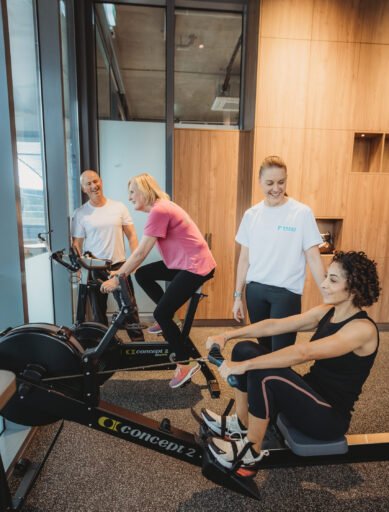
One of the most common barriers to starting strength training for adults over 40 is the commercial gym environment — crowded, loud, and often intimidating if you’re new or returning after a long break. Our private studio in Norwest removes that barrier entirely. Sessions are one-on-one, the environment is calm and focused, and there is no comparison to anyone else. Many clients tell us that training privately made starting possible when the thought of a public gym kept them from taking the first step.
We work with complete beginners and returning exercisers from Norwest, Bella Vista, Castle Hill, Glenhaven, Kellyville, Rouse Hill and surrounding suburbs. If you’ve been thinking about starting strength training but haven’t known where to begin, we’d love to be your starting point.
Book a free consultation with our team here.
Health and happiness,
Ryan Fraser
Disclaimer: This post is for general educational purposes only and does not constitute medical advice. Always consult your GP or a qualified health professional before beginning a new exercise program, particularly if you have a pre-existing health condition.

baulkham hills, Bella vista, castle hill, hills district, kellyville, norwest, personal trainer, personal training
If you work at Norwest Business Park, you already know the paradox. You’re surrounded by one of Sydney’s most beautifully…
13/08/2026

