

How to Exercise After a Heart Attack or Cardiac Event — A Guide for Adults in the Hills District
If you or someone you love has experienced a heart attack, cardiac bypass surgery, a stent procedure, or another significant…
01/06/2026
If you or someone you love has experienced a heart attack, cardiac bypass surgery, a stent procedure, or another significant cardiac event, and you live in Norwest, Bella Vista, Castle Hill or the wider Hills District — this post is written for you. The period after a cardiac event is one in which exercise feels simultaneously most important and most frightening. The fear of pushing too hard, of triggering another event, of doing something that causes harm, is entirely understandable. What is equally important to understand is this: with appropriate medical clearance and properly supervised exercise, physical activity is not a risk after a cardiac event — it is one of the most powerful tools available for recovery and long-term heart health.
The research on exercise and cardiac rehabilitation is among the most robust in all of medicine. Structured exercise after a cardiac event produces outcomes that are profound and well-documented:
The message from the evidence is clear: exercise is not something to be cautious about after a cardiac event — it is something to be cautious about not doing.
Before beginning any exercise program after a cardiac event, written medical clearance from your cardiologist or GP is non-negotiable. This is not a formality — it is the essential foundation of a safe return to exercise. Your medical team will determine when you are ready to begin, what restrictions apply, and what monitoring is appropriate as you progress.
In Australia, formal cardiac rehabilitation programs are available through most hospitals following a significant cardiac event. These programs provide supervised exercise, education, and psychological support in the early recovery phase and are strongly recommended before transitioning to community-based exercise. If you have not completed a formal cardiac rehabilitation program, speak with your cardiologist about accessing one.
Once you have completed cardiac rehabilitation and received clearance for ongoing community exercise, a qualified personal trainer with experience in cardiac populations can provide the ongoing structured exercise and accountability that produces the best long-term outcomes.
Before beginning supervised exercise after a cardiac event, your personal trainer should have a clear understanding of the following from your medical team:
This information shapes every aspect of program design and session delivery. A trainer working with cardiac clients without this information is not working safely.
In the weeks and months following a cardiac event, exercise is introduced gradually and conservatively — with careful monitoring of symptoms, heart rate, and perceived exertion throughout every session:
Aerobic exercise forms the foundation of early cardiac rehabilitation. Walking is typically the first activity — initially at low intensity and short duration, progressing gradually over weeks and months. The goal is to build exercise tolerance progressively without exceeding the safe heart rate and intensity parameters established by the medical team.
Resistance training is introduced carefully after adequate aerobic conditioning has been established — typically six to eight weeks post-event in uncomplicated cases, longer following bypass surgery. The initial focus is on light loads, high repetitions, and technique rather than strength development. Breath holding during effort — the Valsalva manoeuvre — must be strictly avoided, as it produces significant acute increases in blood pressure that are inappropriate in the cardiac recovery context.
Flexibility and mobility work is appropriate from early in the recovery period and supports the range of motion and movement quality needed for safe return to broader exercise. For bypass surgery patients, chest and shoulder mobility work requires particular care in the early post-operative period due to sternal healing.
With consistent, appropriate exercise and medical follow-up, most adults who have experienced a cardiac event progress significantly over 6 to 12 months. Exercise tolerance improves, heart rate at submaximal efforts decreases, strength and functional capacity recover, and the confidence to move freely and actively returns. Many cardiac patients reach a level of fitness after a year of consistent exercise that exceeds what they had before their event — because the event prompted a genuine, sustained commitment to physical health that had not previously existed.
The progression is gradual and must be guided by both the individual’s response to exercise and their ongoing medical management. This is not a linear process — there will be days when fatigue, medication adjustments, or health changes require a modified or reduced session. An experienced coach navigates these variations without abandoning the program.
For adults recovering from a cardiac event, the exercise environment matters enormously. A crowded commercial gym — without supervision, without monitoring, and without a trainer who knows your history and your parameters — is not an appropriate setting for cardiac exercise in the early and intermediate recovery phases. The anxiety of exercising in an unfamiliar public environment, the absence of supervision, and the lack of a response plan if symptoms arise are all genuine concerns.
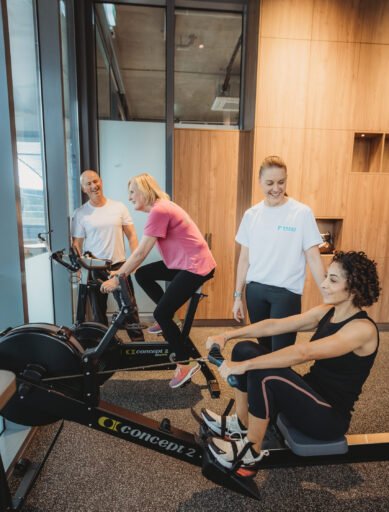
Our private studio in Norwest offers one-on-one supervised sessions in a calm, controlled environment where every session is monitored from start to finish. Your trainer knows your cardiac history, your exercise parameters, and your response to previous sessions. If symptoms arise, the response is immediate and appropriate. For cardiac clients and their families, this environment provides not just effective exercise but genuine peace of mind.
Our Ryoga stretch and mobility classes offer specific benefits for adults in cardiac recovery. The focus on breath work — deep, diaphragmatic breathing — directly supports cardiovascular function and autonomic nervous system regulation. The stress reduction and parasympathetic nervous system activation that Ryoga produces is particularly valuable for cardiac recovery, given the well-documented role of chronic stress and sympathetic dominance in cardiovascular disease. Many cardiac clients find that Ryoga provides the most calming and restorative experience in their recovery routine.
Ryoga for cardiac clients is always introduced gradually and in close consultation with their medical team and personal trainer, ensuring that the level of physical demand is appropriate for their stage of recovery.
Learn more about Ryoga — yoga and stretch classes in Baulkham Hills.
Supporting a loved one through cardiac recovery is emotionally demanding — and the fear of them overexerting themselves during exercise is entirely understandable. What we consistently see at Focus Health & Fitness is that appropriate, supervised exercise is among the most reassuring things a cardiac patient can do — both for themselves and for their family. When exercise is properly guided, properly monitored, and properly progressive, it builds confidence rather than anxiety. Family members are always welcome to be present at sessions, and we actively encourage open communication with the broader care team.
Exercise after a cardiac event works best as part of a coordinated care approach. We actively encourage clients to share their exercise program with their cardiologist and GP, and we are happy to communicate with their medical team where appropriate. The combination of optimal medical management and structured, supervised exercise produces outcomes that neither achieves as effectively alone.
We work with adults recovering from cardiac events from Norwest, Bella Vista, Castle Hill, Glenhaven, Kellyville, Rouse Hill and surrounding suburbs. If you or a family member has experienced a cardiac event and is looking for safe, supervised, expertly guided exercise to support long-term heart health, we would love to talk.
Book a free consultation with our team here.
Health and happiness,
Ryan Fraser
Disclaimer: This post is for general educational purposes only and does not constitute medical advice. Exercise after a cardiac event must only be undertaken with written clearance from your cardiologist or GP, and should be supervised by a qualified professional with relevant experience. If you experience chest pain, chest pressure, significant shortness of breath, dizziness, or palpitations during or after exercise, stop immediately and seek urgent medical attention.

baulkham hills, Bella vista, cardiac health, castle hill, heart attack, heart health, hills district, kellyville, norwest, personal trainer, personal training
If you work at Norwest Business Park, you already know the paradox. You’re surrounded by one of Sydney’s most beautifully…
13/08/2026

